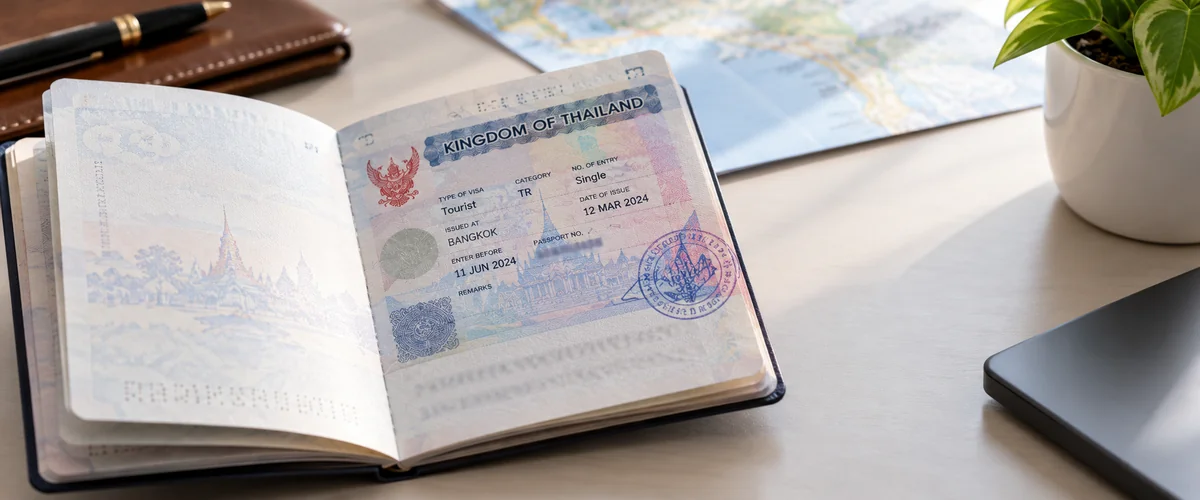
Visiting Thailand Often? Visa Options for Frequent Visitors
Each 3-week trip is within the 30-day visa exemption, so technically you don't need a visa. But the exemption is now tourism-only, land-border entries are capped at two per calendar year, and officers can refuse anyone who seems to be living in Thailand on repeated exemptions.
If you visit every few weeks all year, you will probably spend more than 180 days in Thailand. A DTV (5 years, multiple entry) or, if you're 50+, a retirement extension with a multiple re-entry permit is much safer.
Example: 3 weeks in, 3 weeks out
Eight to nine trips a year of 21 days each = about 170–190 days in Thailand. That's close to tax residency, and well beyond what immigration expects of a tourist. Flying in each time avoids the land-border cap, but frequent entries are still reviewed at the officer's discretion.
Better options: a DTV (multiple entry for 5 years, each entry up to 180 days); a Non-O-based extension with a multiple re-entry permit if you're 50+ or married to a Thai; or Thailand Privilege for frequent travellers who value convenience.
Do I need 90-day reports if I leave every 2 months?
No. The 90-day report applies only after 90 consecutive days in Thailand. Each new entry restarts the count. See 90-day reporting when you travel.
Frequently asked questions
I visit Thailand for 3 weeks every 6 weeks. Do I need a long-stay visa?
Legally each trip fits the 30-day exemption, but frequent entries are increasingly refused, and land-border exemption entries are capped at two a year. A DTV or a long-stay extension with a multiple re-entry permit is the safer choice.
Is there a limit on how many times I can enter Thailand visa-free?
Since 15 September 2026, visa-exempt entries through land borders are limited to two per calendar year. There is no fixed limit for air entries, but officers can refuse entry if they believe you are not a genuine tourist.
Do I need to do a 90-day report if I leave Thailand every 2 months?
No. You only report after 90 continuous days in Thailand; leaving and re-entering restarts the count.
Will I be refused entry for visiting Thailand too often?
It can happen. Officers may refuse entry if your travel pattern suggests you are living in Thailand on visa exemptions, and land-border exemption entries are capped at two a year. A DTV or long-stay visa removes the risk.
Official sources and how we checked
We checked the facts on this page against the sources below on 17 October 2026. Government and regulator sources are marked Official. Others are only used to confirm how offices apply the rules in practice.
- Announcement of the revision of Thailand’s visa exemption and visa on arrival schemes (8 Sep 2026) — Royal Thai Embassy, London Official
- Thailand introduces new 30-day and 15-day visa exemption rules from 15 September — Tourism Authority of Thailand Official
- Notification of staying in the Kingdom over 90 days — Immigration Bureau Official
- Thai e-Visa — official application portal — Ministry of Foreign Affairs Official
- Thailand Privilege Card (formerly Thailand Elite) — Thailand Privilege Card Co., Ltd. (state-owned) Official
Facts, guidance and advice: fees, money thresholds and legal deadlines on this page come from the sources above. Comments on how the Pattaya (Jomtien) office handles things are our day-to-day experience and can change without notice. Immigration officers have discretion, and none of this is legal advice for your situation. Fees shown are government fees. Nan Services' own service fees are separate and are quoted in writing before any work starts.